
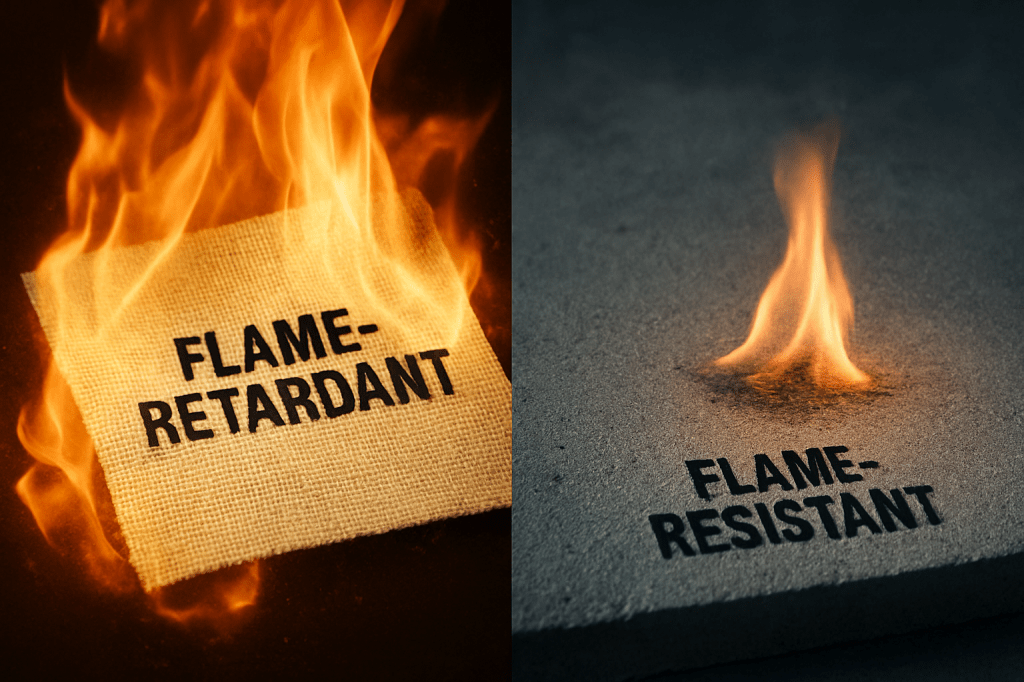
What Does “Flame-Resistant” Mean?
Flame-resistant is a characteristic to resist ignition and to self-extinguish if ignited.
What Does “Flame-Retardant” Mean?
Flame retardants are activated by the presence of an ignition source and are intended to prevent or slow the further development of ignition by a variety of different physical and chemical methods.
What Is the Difference Between Flame-Resistant and Flame-Retardant?
Flame-resistant naturally resist burning when exposed to flames, extinguishing any flame that strikes them.
Flame retardant is a substance that is used to slow down or stop the spread of fire or reduce its intensity.
What is “Flame-Retardant (FR) Treatment” ?
Flame retardant treatment can be classified as either flame retardant or flame resistant depending on the result against an open flame. Since all FR standards are intended to test both types, flame retardant and flame resistant, these two terms are used interchangeably and may share the acronym “FR”. Flame resistant treatments will likely achieve a higher rating or classification than flame retardant treatments when applying the same test standard.
 FiremanBrand